When the stock market becomes harder to predict, investors often end up with more browser tabs open. You check a stock chart, move to the latest news, look for earnings reports and regulatory filings, and then review interest rates and economic indicators. Before long, dozens of pages are competing for your attention.
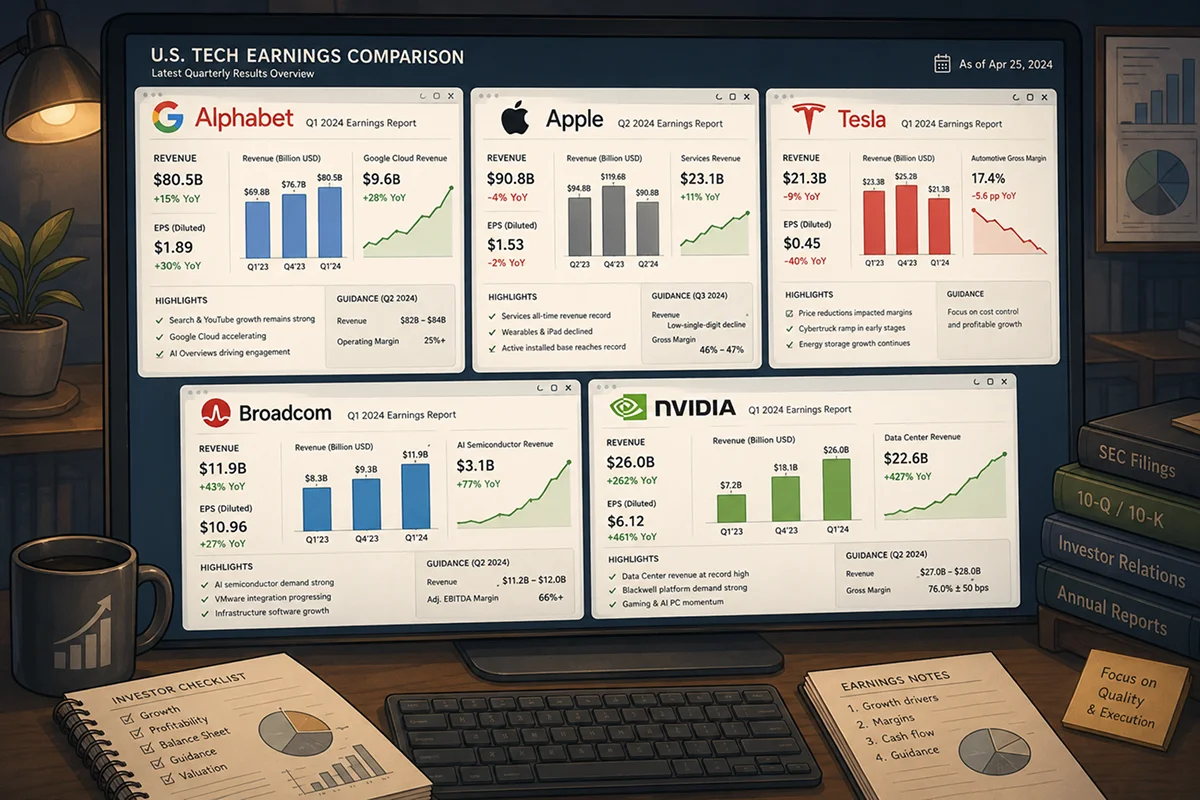
Popular U.S. stocks such as Alphabet, Apple, Tesla, Broadcom, and NVIDIA generate a constant stream of news and analysis. But having more information does not automatically lead to better investment decisions. What matters is knowing which source to use, separating different types of information, and checking original documents whenever possible.
Here are eight stock research websites that can help investors build a more organized research routine during volatile markets.

This article is for informational purposes only and does not recommend buying or selling any security. All investment decisions and risks remain the responsibility of the investor. Always compare information from multiple sources.
1. SEC EDGAR — Read the Filings Submitted by Companies
SEC EDGAR lets you search documents that publicly traded U.S. companies file with the Securities and Exchange Commission. It is one of the most important places to visit when you want to read the original disclosure instead of relying only on a news report or commentary.
- 10-K: Annual business and financial information
- 10-Q: Quarterly results and material developments
- 8-K: Significant current events such as acquisitions or leadership changes
- Historical filings searchable by company name or ticker
You can search for Alphabet using GOOGL or GOOG, Apple using AAPL, Tesla using TSLA, Broadcom using AVGO, and NVIDIA using NVDA. Because filings can be long, start with the business overview, risk factors, management discussion, and cash-flow sections.
2. Investor Relations Pages — Go Directly to Earnings Materials
Each company’s Investor Relations (IR) website provides resources such as earnings releases, shareholder letters, conference-call information, and annual reports.
- Alphabet Investor Relations
- Apple Investor Relations
- Tesla Investor Relations
- Broadcom Investor Relations
- NVIDIA Investor Relations
The important metrics differ by company. For Alphabet, investors may follow advertising and cloud results. For Apple, product and services revenue can be useful starting points. Tesla investors often watch vehicle deliveries and the energy business. Broadcom spans semiconductors and infrastructure software, while NVIDIA investors frequently focus on data-center results and demand related to AI computing.
3. Nasdaq — Review Quotes and Earnings Dates
Nasdaq is useful for reviewing U.S. stock quotes, volume, historical data, and earnings information. It can provide a quick overview of a company’s market activity and help investors organize upcoming earnings dates.
Data availability and timing can vary by page. Before placing an order, verify price and trading information through the brokerage you use.
4. TradingView — Compare Stock Charts on the Same Basis
TradingView provides stock charts, comparison tools, and screeners. You can place Alphabet, Apple, Tesla, Broadcom, and NVIDIA on a consistent time frame to compare price changes and trading volume.
Charts describe past price behavior; they do not guarantee future returns. Instead of adding every available indicator, begin with information you can interpret clearly, such as the selected time period, volume, and major earnings dates.
5. Yahoo Finance — Scan Your Watchlist Quickly
Yahoo Finance brings together quotes, company news, financial information, earnings dates, and watchlists. It can be a convenient starting point for scanning the market before moving to company IR pages or SEC filings for the original source.
6. Reuters Markets — Understand What May Be Moving the Market
Reuters Markets covers company, industry, and macroeconomic news. When a stock moves sharply, it can help you investigate whether the change is related to earnings, regulation, supply chains, interest rates, or a broader industry development.
Avoid making a decision from a headline alone. Check when the report was published, what evidence it cites, and whether the details match the company’s official announcement.
7. FRED — Examine Interest Rates, Inflation, and the Economy
FRED, provided by the Federal Reserve Bank of St. Louis, contains a broad collection of economic data. Investors can use it to examine long-term charts for interest rates, Treasury yields, consumer prices, unemployment, and other indicators that may affect the stock market.
Even when researching growth or semiconductor stocks, looking beyond company-specific news can provide useful context about interest rates and the wider economy.
8. CME FedWatch — Follow the Market’s Rate Expectations
CME FedWatch shows market-implied expectations for changes in the Federal Reserve’s target rate based on interest-rate futures. It can be useful for observing how expectations change ahead of Federal Open Market Committee meetings.
The displayed probabilities are not certain forecasts. They reflect expectations embedded in market prices and can change quickly when new economic data or policy comments are released.
Define a Research Order Before Adding More Stocks
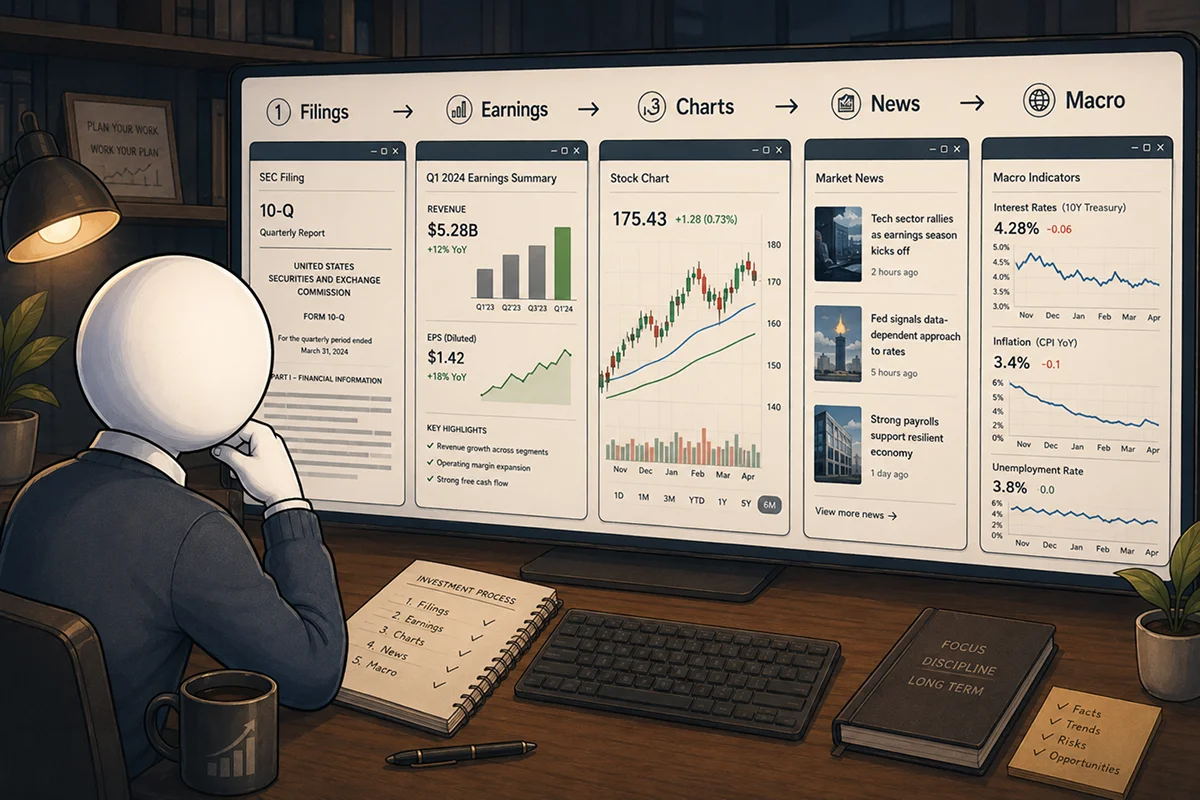
Visiting every website repeatedly can create more noise instead of clarity. A simple research order can reduce unnecessary searching:
- Scan the market and your watchlist on Yahoo Finance or Nasdaq.
- If a stock moves sharply, check Reuters for the surrounding news.
- Verify earnings or company events through the relevant IR page and SEC EDGAR.
- Use TradingView to compare time periods and trading volume consistently.
- Review the interest-rate and economic backdrop through FRED and CME FedWatch.
If your watchlist includes Alphabet, Apple, Tesla, Broadcom, and NVIDIA, you do not necessarily need a separate folder for every stock. Organizing resources by purpose—filings, earnings, charts, news, and economic data—can make the same research process reusable when you add another company.

Organize Stock Research Websites in One Urlala Folder
Even after finding reliable websites, it is easy to lose them when you need them again. Keeping every page open as a browser tab or sending links to yourself in a messaging app can quickly create another pile of scattered information.
With Urlala, you can save frequently used stock research websites in a folder and organize them by purpose, such as filings, earnings, charts, news, and economic indicators. You can also share the entire folder with someone else instead of copying and sending every URL separately.
The card below opens a shared Urlala folder containing the U.S. stock research websites introduced in this article. Use it to reach helpful sources for researching Alphabet, Apple, Tesla, Broadcom, and NVIDIA—and as a starting point for building your own research collection.
When information is abundant, the goal is not simply to read more. It is to know where to look and what to verify. Organizing the websites you trust can help you move directly to the right source, even on a volatile market day.